


SECA Body Composition Analysis
Whether you’re working toward weight loss, building or maintaining muscle, improving your metabolic health, or simply want a better understanding of your body, a SECA body composition scan provides information that a traditional scale and BMI alone cannot.

Understand Your Body Beyond the Number on the Scale
Your weight is only one piece of the picture. Two people can weigh exactly the same yet have very different amounts of body fat, muscle mass, and visceral fat.
At LifeStream Family Medicine, our SECA Body Composition Analysis provides a more detailed look at what your body is made of. Using advanced bioelectrical impedance analysis (BIA) technology, SECA can help measure important aspects of your body composition so you and your healthcare provider can better understand your health, establish meaningful goals, and track changes over time.
Schedule your SECA Body Composition Analysis at LifeStream Family Medicine today.
What Is a SECA Body Composition Analysis?
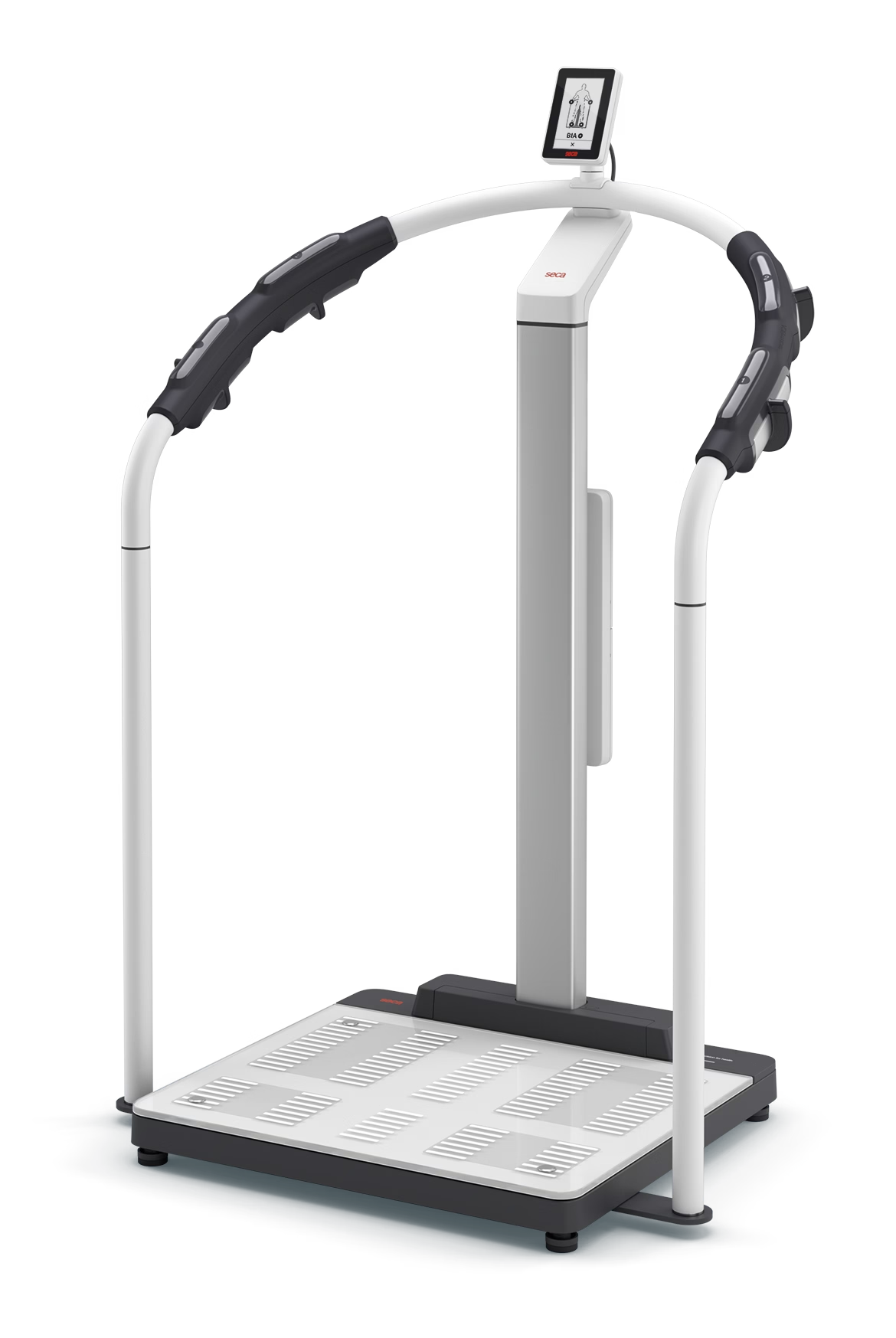
A SECA body composition analysis is a fast, non-invasive assessment designed to evaluate different components of your body rather than simply measuring total body weight.
SECA medical body composition analyzers use Bioelectrical Impedance Analysis (BIA). During the measurement, a very low electrical current passes through the body. Different types of body tissue have different electrical properties, allowing the system to calculate and analyze various aspects of body composition.
Depending on the SECA system and clinical assessment being used, your results may provide insight into measurements such as:
The result is a much more detailed view of your body than you can get from stepping on a conventional bathroom scale.

Why Body Composition Matters
Your Weight Doesn’t Tell the Whole Story
Traditional weight measurements tell you how much you weigh—but not what that weight consists of.
For example, losing ten pounds doesn’t necessarily mean you’ve lost ten pounds of body fat. Changes in your weight can come from fat, muscle, water, or a combination of these.
Likewise, someone following a nutrition and exercise program may see very little change on the scale while simultaneously losing body fat and gaining or maintaining muscle.
That’s why body composition analysis can be valuable.
Instead of focusing exclusively on pounds, body composition testing can help you better understand changes occurring inside your body.
What Does a SECA Body Composition Scan Measure?
Your SECA assessment can provide several important measurements that help create a more complete picture of your health and physical composition.
SECA Body Composition vs. BMI
BMI, or Body Mass Index, uses your height and weight to place you into a general weight category.
While BMI can be useful as a screening tool, it has important limitations.
BMI cannot tell the difference between:
For example, someone with significant muscle mass may have a higher BMI even though their overall body composition differs considerably from another person with the same height and weight.
A body composition assessment adds information that BMI alone cannot provide.
Rather than asking only:
“How much do I weigh?”
Body composition analysis helps answer a more useful question:
“What is my body weight made of?”
SECA vs. DEXA Body Composition Scans
Patients researching body composition testing often encounter two technologies: SECA BIA body composition analysis and DEXA (or DXA) scans.
Both can provide valuable body composition information, but they work differently.
SECA Body Composition Analysis
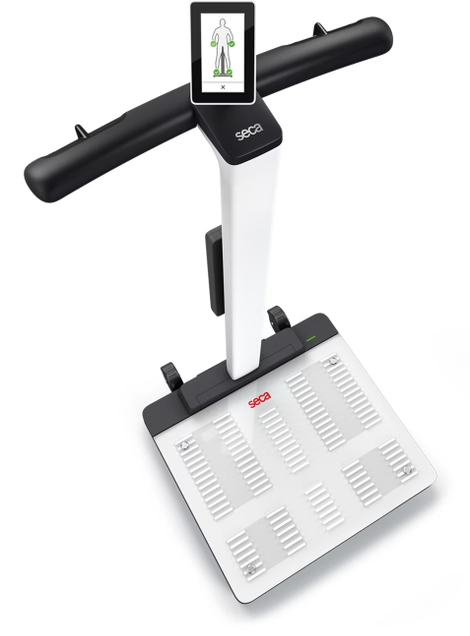
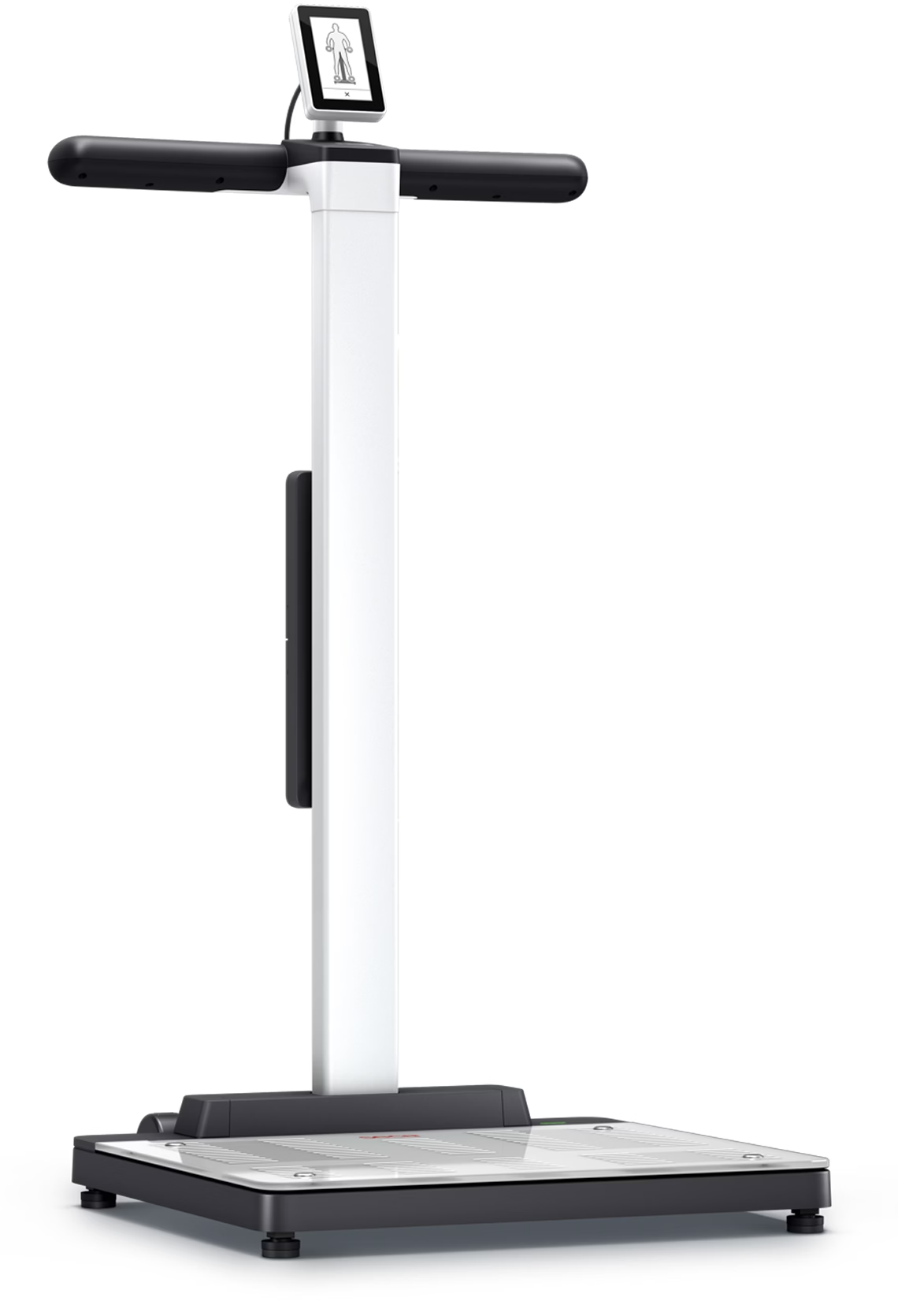
SECA medical body composition analyzers use bioelectrical impedance analysis (BIA).
Depending on the system and assessment, SECA can provide information about:
The test is fast and non-invasive and does not use X-rays.
DEXA Body Composition Scan
DEXA stands for Dual-Energy X-Ray Absorptiometry.
DEXA uses low-dose X-ray technology and can evaluate:
One important distinction is that DEXA can measure bone mineral density, while SECA BIA body composition testing is not a bone-density test.
For patients primarily interested in monitoring body fat, muscle mass, visceral fat, and changes in body composition over time, SECA provides a convenient option that can be incorporated into a broader health or weight-management plan.
If bone density assessment is medically necessary, your healthcare provider can recommend the appropriate testing.

SECA vs. a Regular Smart Scale
Many consumer smart scales now estimate body fat percentage using BIA technology. However, there is an important difference between consumer home scales and medical body composition analyzers.
SECA’s medical body composition systems are designed specifically for professional healthcare environments and use advanced measurement technology and clinically validated algorithms.
They can provide considerably more information than the weight and basic body-fat estimates commonly displayed by household smart scales.
Another major advantage is interpretation.
At LifeStream Family Medicine, body composition information can be considered alongside your broader health picture rather than viewed as an isolated number on an app.

Body Composition Analysis for Weight Loss
If you’re trying to lose weight, watching the scale can sometimes be frustrating.
Your weight may remain relatively stable even while meaningful changes are happening to your body composition.
For example, an effective nutrition and exercise program may result in:
Body fat decreasing + muscle being maintained or increased = limited change in total scale weight.
A conventional scale might make that look like a lack of progress.
A body composition scan provides another way to evaluate what’s happening.
Tracking body fat, fat mass, muscle mass, and other measurements can help you and your provider evaluate your progress more comprehensively.
Track Your Progress Over Time
One of the greatest benefits of body composition analysis isn’t necessarily a single measurement.
It’s the ability to compare measurements over time.
Your initial SECA assessment can establish a baseline.
Future assessments can then help identify trends such as:
This information can be especially useful when combined with medical guidance, nutrition changes, exercise, and other lifestyle interventions.
For the most meaningful comparisons, follow-up measurements should generally be performed under similar conditions whenever possible because factors such as hydration, food intake, and recent exercise can influence BIA measurements.
Who Can Benefit From a SECA Body Composition Analysis?
Body composition testing can be helpful for many adults, including people who are:
What to Expect During Your SECA Body Composition Test
A SECA body composition measurement is designed to be quick and straightforward.
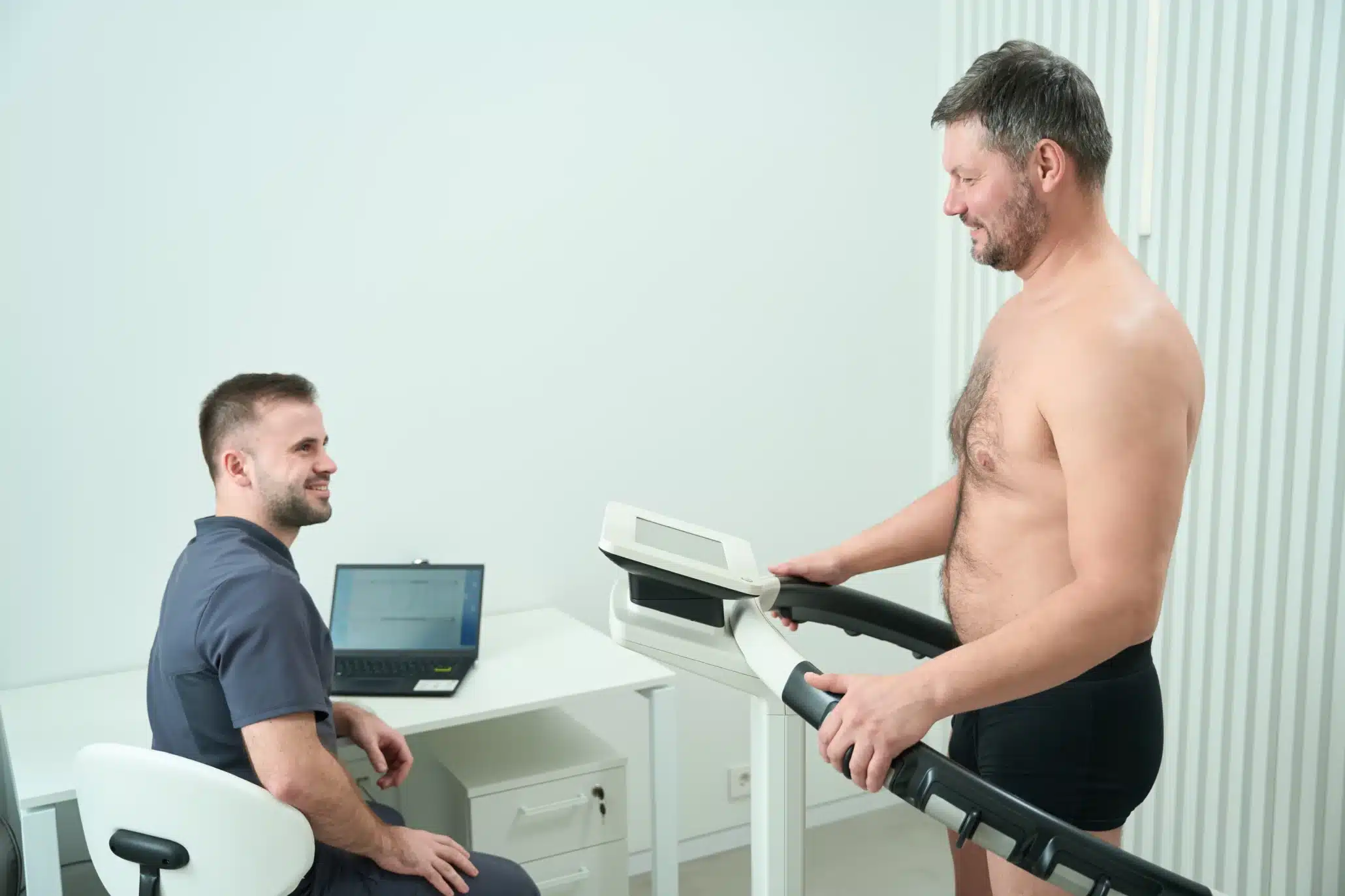
You’ll stand on the analyzer and follow instructions provided by our team. Depending on the specific SECA system, you’ll make contact with designated electrodes while the analyzer performs the measurement.
The process takes only a short amount of time.
Afterward, your results provide a detailed breakdown of your body composition.
Your healthcare team can help put those numbers into context and discuss how they relate to your individual health goals.
How to Prepare for Body Composition Testing
Because BIA measurements are influenced by factors such as hydration, consistency is important, particularly when comparing results over time.
Our team will provide any specific preparation instructions before your appointment.
In general, maintaining similar testing conditions between appointments can make follow-up comparisons more meaningful.
Rather than becoming overly focused on small changes between individual scans, body composition testing is often most useful for identifying longer-term trends.
A Better Way to Measure Progress
Health is about much more than reaching a particular number on the scale.
Knowing your body fat percentage, muscle mass, visceral fat, and overall body composition can provide additional information to help you understand where you are today and evaluate how your body changes over time.
At LifeStream Family Medicine, we combine advanced health assessment tools with individualized medical care so that numbers become useful information, not just data on a report.
Discover What Your Body Is Really Made Of
If you’re ready to look beyond your weight and gain a more complete understanding of your body, a SECA Body Composition Analysis can help establish your baseline and track your progress.
Schedule your SECA Body Composition Analysis with LifeStream Family Medicine today.
Frequently Asked Questions About SECA Body Composition Analysis
Products & Services Disclaimer: *LifesSream Family Medicine is an independently owned and operated care center that may promote, sell, or provide Weight Loss Program Services. Privia Medical Group is not responsible for these products or services. Privia’s Authorization & Consent to Treat, Financial Policy and HIPAA Notice of Privacy Practices are not applicable to these services or products.